Stanford University School of Medicine
Skin as a Sensor
Using the body’s most accessible organ to detect, understand, and monitor disease
Reading disease through the skin
The Sarin Lab combines dermatology, genetics, imaging, molecular biology, and artificial intelligence to study the skin as a window into human health. We translate discoveries from patients, tissue, and technology into better approaches for disease detection, monitoring, and treatement. The Sarin Lab is overseen by Dr. Kavita Sarin, Associate Professor of Dermatology at Stanford University School of Medicine.
140+ Publications
18+ Years Patient Care
40+ Mentees

Skin as a Sensor
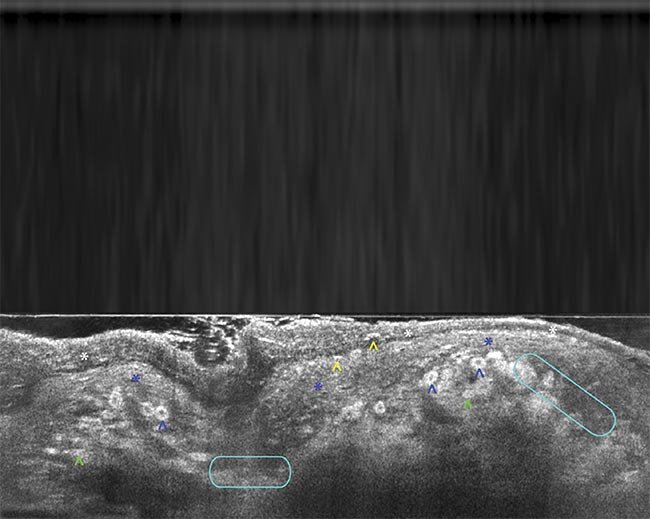
The Sarin Lab at Stanford University School of Medicine studies the skin as a window into systemic health. Skin is the body’s most accessible organ, and it contains dense networks of nerves, immune cells, blood vessels, connective tissue, stem cell niches, and appendageal structures that respond to disease processes throughout the body.
By combining dermatology, genomics, high-resolution imaging, molecular pathology, and artificial intelligence, the lab aims to identify disease signals in the skin and translate them into tools for earlier detection, risk prediction, and long-term monitoring.
Because skin can be safely and repeatedly imaged, sampled, and monitored, it offers a unique opportunity to detect biological changes earlier, track disease progression over time, and develop less invasive approaches to diagnosis and care.