
Enabling Technologies
The Sarin Lab combines advanced imaging, molecular discovery, 3D pathology, and artificial intelligence to detect disease signals in the skin. These technologies help transform skin from a visible surface into a measurable sensor of cancer risk, immune activity, rare disease, and neurologic health.
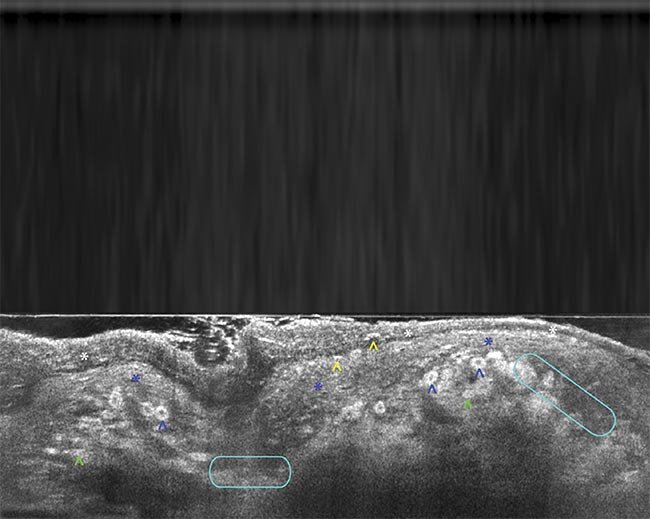
High-Resolution Optical Imaging
A major focus of my work is the development of imaging platforms capable of visualizing living skin at near-cellular resolution. This includes high-definition OCT in collaboration with Yonatan Winetraub and optical clearing approaches such as KLEAR that improve light penetration and reduce tissue scattering in collaboration with Guosong Hong. These technologies allow us to visualize structures that were previously difficult to interrogate in vivo, including tumor aggregates, inflammatory remodeling, vasculature, and potentially neural structures.
The long-term goal is to create “virtual biopsies” capable of rapidly and noninvasively assessing tissue architecture and biologic state.
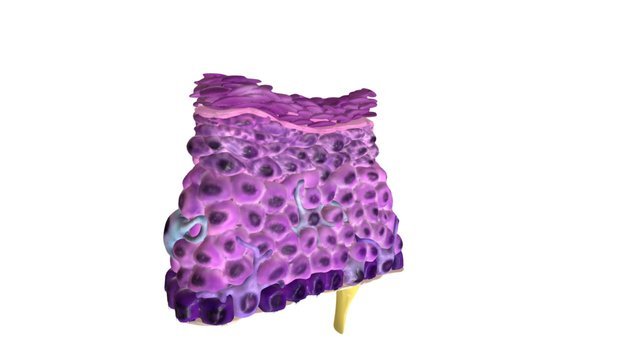
3D Molecular Pathology
The Sarin Lab is interested in developing 3D molecular pathology methods that allow researchers to study intact tissue architecture together with molecular and cellular information. Unlike traditional histopathology, which relies on thin two-dimensional tissue slices, 3D approaches can reveal how nerves, immune cells, blood vessels, tumors, and other structures are organized across larger tissue volumes.
By combining tissue staining, volumetric imaging, and computational reconstruction, this work may provide a more complete view of disease-associated tissue states. Long-term, 3D molecular pathology can help connect biopsy-based discovery with future noninvasive imaging, AI interpretation, and virtual biopsy development.
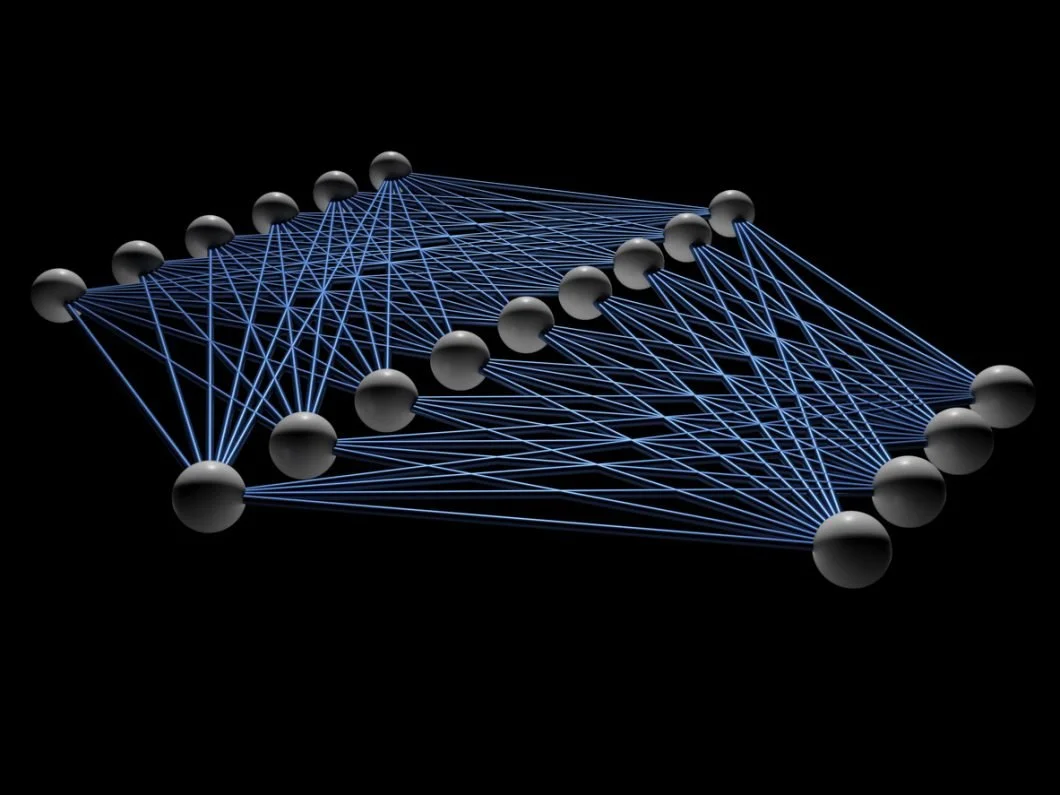
Artificial Intelligence and Computational Analysis
The scale and complexity of imaging and longitudinal phenotyping data require computational approaches. AI-based segmentation, quantitative imaging analysis, multimodal integration, and predictive modeling create the possibility of extracting biologic signals that are not readily visible to the human eye.
Importantly, AI is not simply being used to automate interpretation. It allows us to move toward quantitative disease measurement, longitudinal monitoring, and identification of subtle disease-associated patterns across large patient populations.
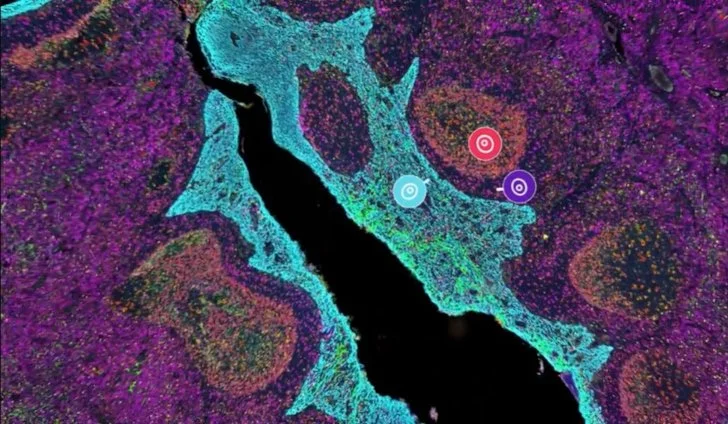
Spatial Biology and Molecular Discovery
The Sarin Lab uses spatial biology and molecular profiling to identify disease-associated biomarkers within the skin. By combining spatial transcriptomics, single-cell analysis, multiplex imaging, quantitative histopathology, and molecular profiling, this work helps characterize immune, neural, stromal, and vascular changes at high resolution.
Skin biopsy remains an important discovery tool because it reveals the biological signals that may later be detected noninvasively. These approaches help the lab understand which diseases leave measurable signatures in the skin, which biomarkers reflect disease progression or treatment response, and which signals could eventually support long-term monitoring and early detection.