Non-Invasive Imaging Publications
The Sarin Lab’s non-invasive imaging research focuses on developing technologies that can visualize, analyze, and monitor skin without relying only on traditional biopsy. This work includes optical coherence tomography, virtual biopsy, image registration, image-quality improvement, and teledermatology-based screening. Together, these studies support the lab’s broader goal of using skin as a measurable sensor for earlier, less invasive disease detection and monitoring.
2024 Journal: Science Advances
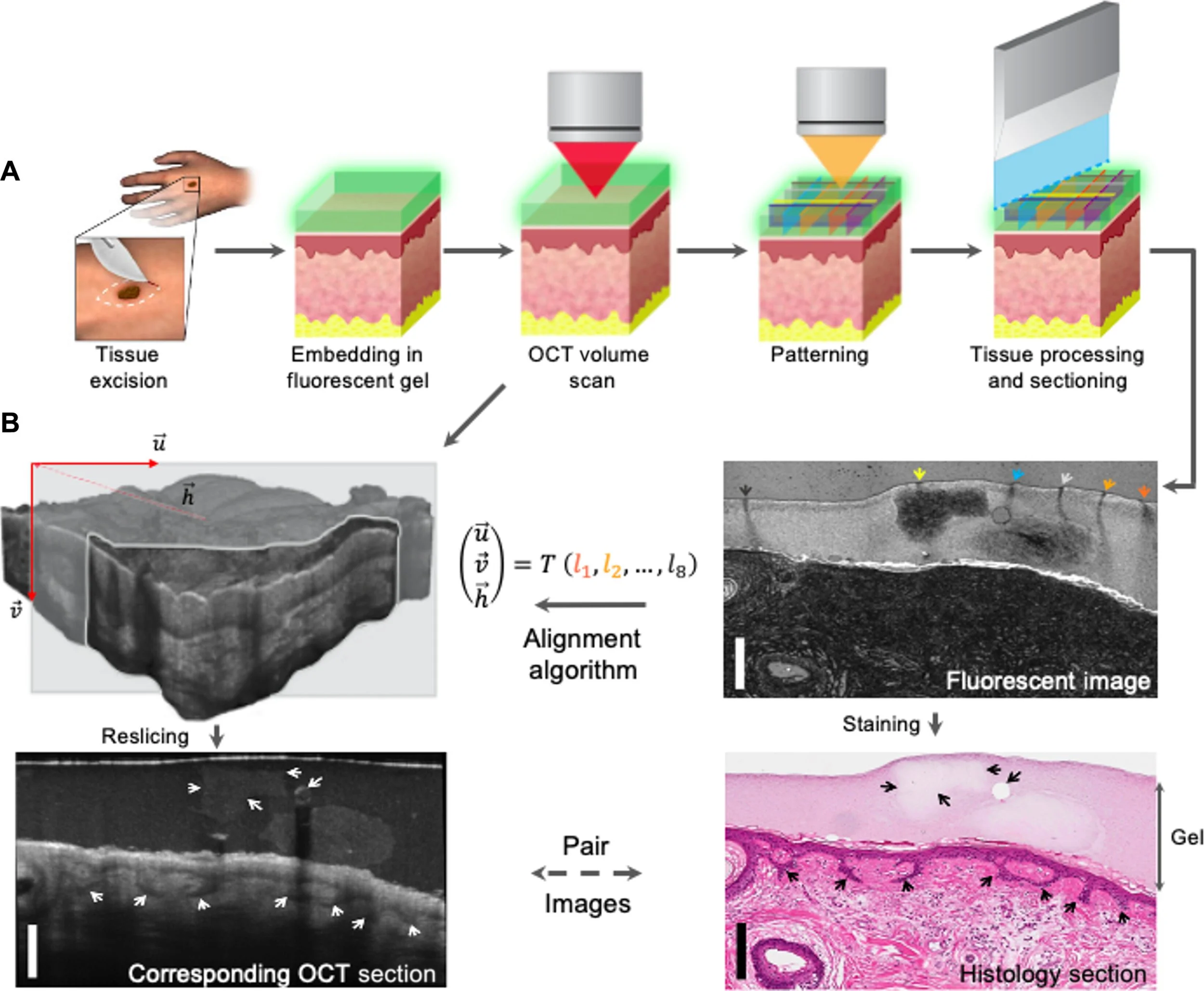
Noninvasive virtual biopsy using micro-registered optical coherence tomography (OCT) in human subjects
This study developed a method to connect non-invasive OCT images with traditional pathology images. By matching OCT imaging to H&E-stained tissue sections, the work supports the long-term goal of creating virtual biopsies that may allow clinicians to evaluate skin disease without unnecessary invasive procedures.
2023 Journal: Science ACS Nano
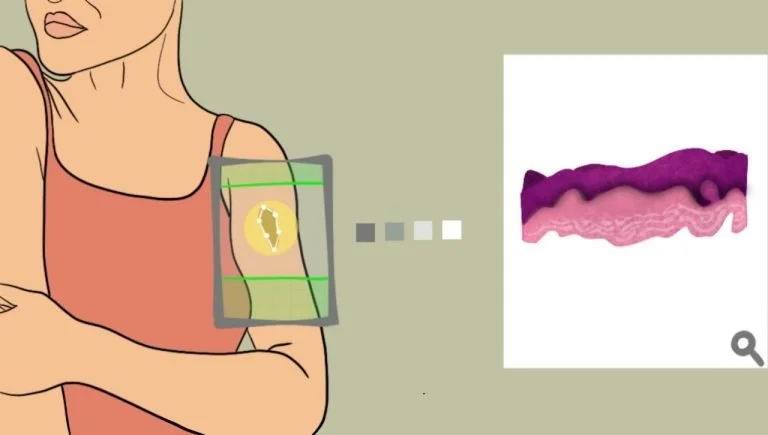
Rapid Cellular-Resolution Skin Imaging with Optical Coherence Tomography Using All-Glass Multifocal Metasurfacesz
This paper presents an OCT imaging approach that improves imaging speed and resolution for dermatologic use. The technology allows researchers to visualize skin structures at near-cellular detail, including epidermal cells and the dermal-epidermal junction, supporting future virtual biopsy development.
2022 Journal: Optica
Flexible method for generating needle-shaped beams and its application in optical coherence tomography
This study describes an optical method that improves the depth of focus in OCT imaging. By helping OCT visualize structures across a larger depth range, this work supports clearer and more useful imaging of skin architecture.
2022 Journal: Skin Health and Disease
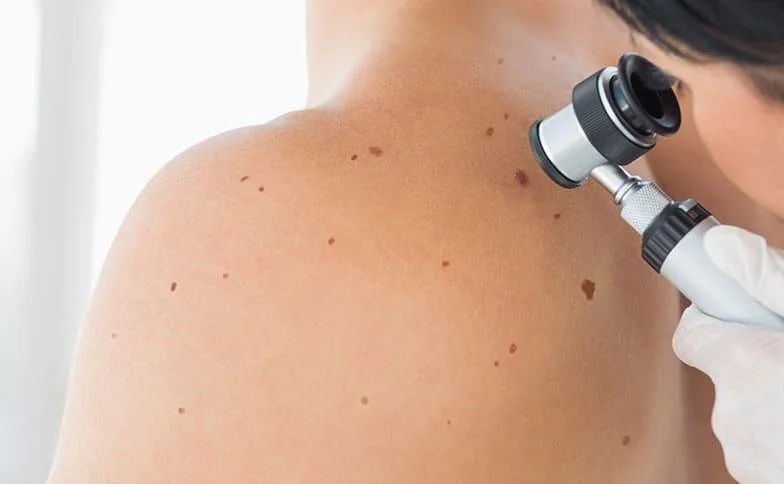
Partnering with a senior living community to optimise teledermatology via full body skin screening during the COVID-19 pandemic: A pilot programme
This pilot program used full-body skin imaging and teledermatology to provide skin screening for older adults who faced barriers to in-person care during the COVID-19 pandemic. The study shows how imaging-based dermatology can improve access to skin monitoring and care.
2020 Journal: Science Reports
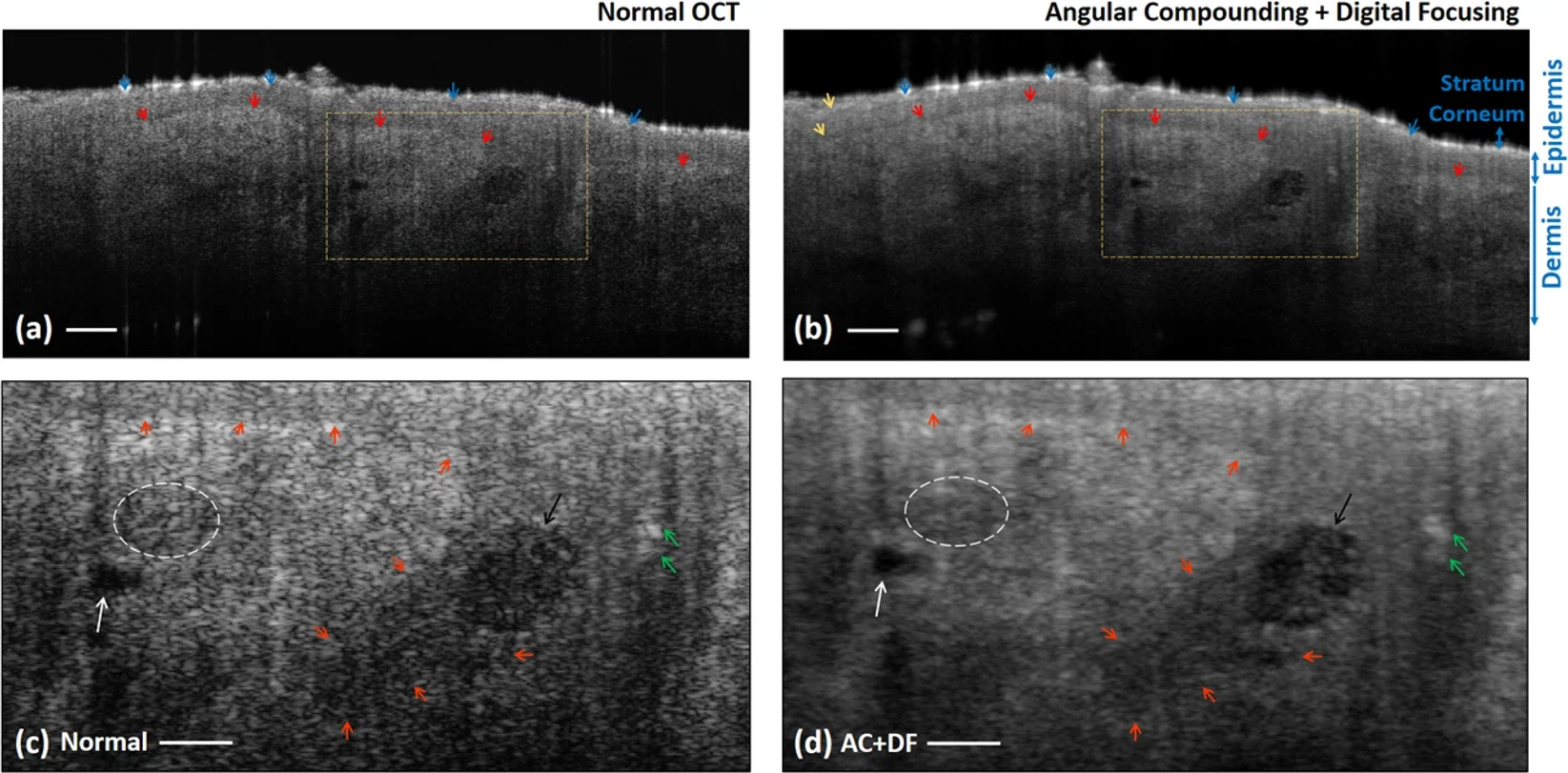
Angular compounding for speckle reduction in optical coherence tomography using geometric image registration algorithm and digital focusing
This study improved OCT image quality by reducing speckle noise and enhancing resolution. Clearer OCT images make it easier to identify fine skin structures and support the development of more reliable non-invasive diagnostic tools.